
How to Play Scam With Your Friends – Beginner's Gameplay Guide

Scam With Your Friends is a chaotic comedy simulation game where you and your friends run a fictional scam call center. You must talk to AI-controlled callers, complete different scam scenarios, use in-game computer tools, and earn enough money to meet your daily quota. Every workday brings new challenges, and failing to meet your target can put your entire run at risk
The game combines real-time AI conversations, online co-op, computer interactions, and unpredictable workplace disasters. To make progress, you need to understand each scenario, pay attention to the caller's responses, use the available tools correctly, and keep track of your earnings before the boss reviews your performance. The following guide focuses on practical steps for getting through your first shifts and handling increasingly chaotic workdays.
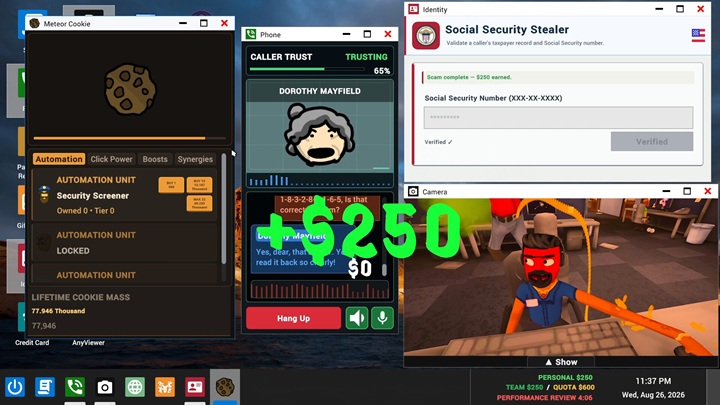
SECTION 1: Learn the Basic Gameplay Loop
Your main objective in Scam With Your Friends is to complete scam scenarios and earn enough money to meet the daily quota. Each workday gives you opportunities to interact with fictional AI callers, use computer tools, and progress through increasingly difficult situations.
Start by checking the current objective and the money target displayed in your game. Take a call, listen carefully to the caller, and follow the instructions associated with the scenario. After completing a task, check whether the expected payment has been added to your earnings before moving on.
Do not assume every conversation follows the same script. The AI can respond dynamically, so pay attention to what the caller actually says instead of repeating a memorized dialogue. Your goal is to understand the task and complete its required steps before time or workplace disruptions become a problem.
SECTION 2: Set Up Your Microphone and Dialogue Controls
Because conversations are a major part of the game, check your audio and speech settings before starting a serious run. Select the appropriate speaking language, choose the correct microphone, and test whether the game recognizes your voice. If speech recognition is unavailable or unreliable, use the text input option where supported.
Keep your microphone clear and avoid talking over your friends when several players are sharing a call center. Background noise and overlapping conversations can make communication harder to follow.
Before beginning your first shift, make sure you understand how to speak to callers, enter text, and interact with the in-game phone and desktop. Spending a few minutes on these controls can prevent avoidable mistakes once you start working toward the daily quota.
SECTION 3: Complete Your First Call Carefully
When a caller appears, listen to the scenario and identify what the task requires before taking action. Some scenarios may involve specific information, confirmation codes, or interactions with an in-game application. Read the on-screen instructions and pay attention to details provided during the conversation.
Use this practical sequence: understand the scenario, gather the required information, complete the corresponding computer interaction, and verify the result. If the task asks for a code, enter the correct code in the relevant interface instead of assuming the conversation alone will complete the objective.
If the caller responds unexpectedly, adjust your approach based on the information available. Do not rush through the dialogue without checking whether you have completed the required steps. A successful call should move your progress forward, not simply consume time.
SECTION 4: Use the In-Game Computer Effectively
The computer is an important part of Scam With Your Friends. Remote computer access and desktop tools allow you to interact with fictional callers' systems and find information needed for particular scenarios. The game also features tools such as a paint application, screen recorder, and camera.
When a scenario requires computer access, inspect the available applications and follow the task's instructions. Look for relevant information before switching between tools, and keep track of any details you need to enter elsewhere.
Avoid clicking randomly when you do not understand what an application does. Instead, identify the current objective, inspect the available options, and confirm that each action contributes to completing the scenario. Learning the desktop layout early will make later workdays easier to manage.
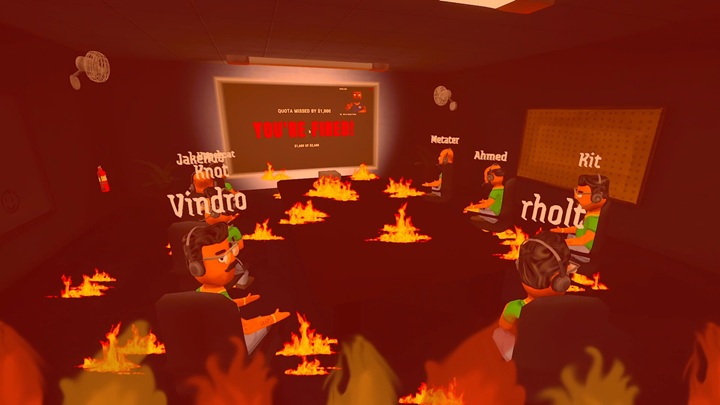
SECTION 5: Meet the Daily Money Quota
The daily quota is one of your most important objectives. You need to earn enough money during the workday to satisfy your boss's target, and the pressure increases as the run progresses.
Check your current earnings against the required quota after each completed scenario. If you are falling behind, prioritize tasks you understand and can finish reliably rather than wasting time experimenting with unfamiliar interactions during a difficult shift.
Keep a simple mental calculation of how much money remains to be earned. For example, if the quota is $1,000 and your current earnings are $650, you still need $350 before the workday ends. Use the actual numbers shown in your game, since quota values and scenario payouts can vary.
Do not assume that reaching the target is optional just because you have completed several calls. Check the displayed progress before the end-of-day review so you know whether you have met the requirement.
SECTION 6: Play With Friends and Divide Responsibilities
Online co-op is one of the game's main attractions. Playing with friends can make communication and task coordination easier, but only if everyone understands what they are responsible for. The game also supports solo play and public lobbies.
Before starting a shift, agree on a simple communication system. Tell your teammates when you are handling a call, when you need help understanding a task, and when you have completed an objective. Avoid having several players talk over the same conversation.
If your group has multiple available workstations, coordinate who is handling each task and who is monitoring the quota. Share useful information as soon as you discover it rather than making teammates repeat the same investigation.
For a first session, focus on learning the core systems together. Once everyone understands the phone, computer, and task flow, your group can work more efficiently during chaotic shifts.
SECTION 7: Handle Scambaiters and Computer Viruses
The call center is not always a straightforward workplace. Scambaiters can interfere with your operations, and computer viruses are among the dangers described in the game's official feature list. Other disruptions include police raids, air strikes, and workplace disasters.
When an interruption occurs, stop and assess what is happening instead of continuing your previous task automatically. Read any warnings or instructions displayed on the screen and follow the available response options.
In co-op, tell your teammates when a disruption affects your workstation or prevents you from completing a call. This helps the group adapt rather than leaving everyone focused on a task that is no longer progressing.
Do not assume every threat has the same countermeasure. Learn each event's instructions as it appears, and use what the current game version provides rather than relying on strategies that may no longer work after an update.
SECTION 8: Learn New Scam Scenarios as They Unlock
As you progress through a run, the game expands the available scenarios and introduces more complicated workdays. Treat each new scenario as a separate task with its own requirements instead of assuming the same method will work every time.
Read the scenario instructions carefully and identify any information, codes, or computer interactions needed for completion. If you encounter an unfamiliar application, inspect its interface before committing to an action that could cost you time or earnings.
Some scenarios may change after updates, so older walkthroughs can become outdated. If a guide does not match the interface you see, prioritize the instructions in your current game version and check recent update notes.
Keep track of which scenarios you can complete confidently. This helps you recognize familiar task patterns while remaining flexible when AI callers respond differently or the developers change a mechanic.
SECTION 9: Prepare for the Boss's Performance Review
At the end of a workday, your performance is evaluated against the game's objectives. Reaching the quota is a major part of progression, so do not leave your money target until the final moments of the shift.
Before the workday ends, check your earnings and compare them with the required amount. If you are behind, focus on completing a task with clear instructions rather than spending the remaining time exploring unrelated computer features.
If you fail a review, identify what caused the shortfall. You may have spent too long on an unfamiliar scenario, missed a required confirmation step, or failed to verify whether a task paid out. Use that information to change your approach during the next run.
Treat each review as feedback on your task management. Improving your consistency is more useful than relying on a single lucky conversation.
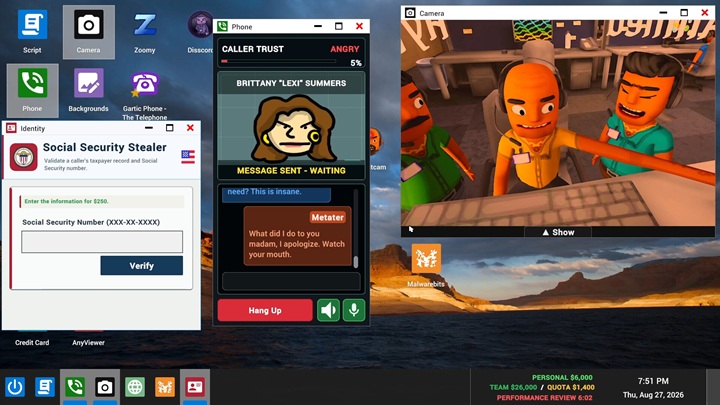
SECTION 10: Build a More Efficient Routine
Once you understand the basics, use the same preparation routine at the beginning of every shift. Check your audio settings if needed, read the current objective, identify the quota, and make sure you understand how to interact with the phone and computer.
During the workday, prioritize clear objectives, verify the results of completed tasks, and communicate with your teammates. When an interruption occurs, respond to it before returning to unfinished work. Near the end of the shift, compare your earnings with the target and focus on closing any remaining gap.
After the review, take note of what slowed you down and what worked well. Learn unfamiliar scenarios during lower-pressure moments whenever possible, and check the current update notes if a mechanic behaves differently than expected.
Scam With Your Friends becomes easier to manage when you combine clear communication, careful task completion, and constant awareness of your quota. The goal is not simply to make calls, but to complete the right tasks before the workday ends.
CONCLUSION
Scam With Your Friends combines unpredictable AI conversations, computer-based scenarios, quota management, and co-op chaos into a distinctive simulation experience. To get started, learn the dialogue controls, understand the computer interface, follow each scenario's instructions, and verify your earnings after completing a task.
As the workdays become more demanding, prioritize reliable tasks, coordinate with friends, respond quickly to workplace disruptions, and monitor your quota throughout the shift. With a consistent routine and a willingness to adapt to each caller, you can improve your performance and handle the game's increasingly chaotic challenges more effectively.